







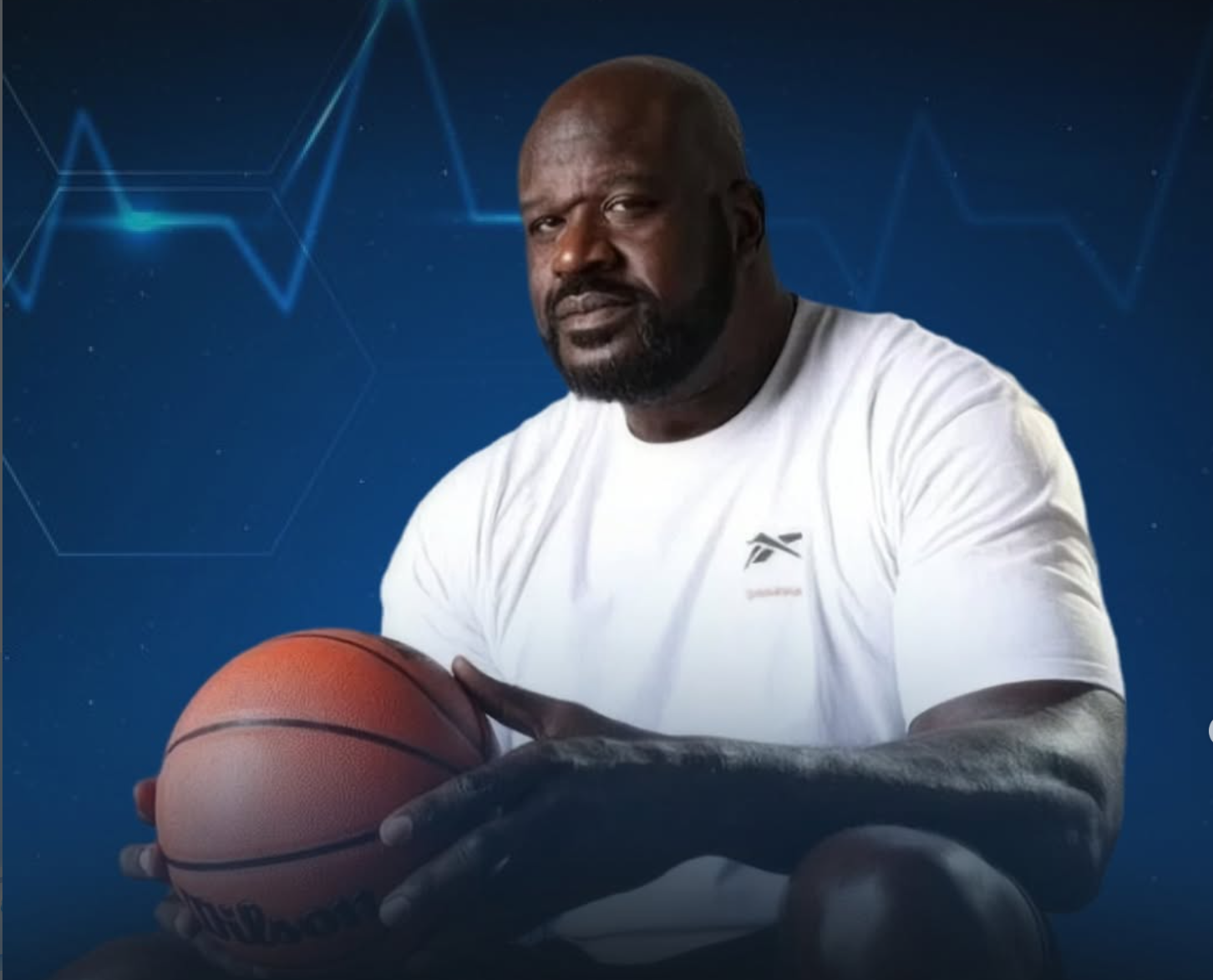
Shaquille O'Neal thought his snoring was normal. For years, he was exhausted during the day and gasping for air at night, and he assumed that just came with being a man his size. It didn't. He had moderate obstructive sleep apnea.
In June 2026, that diagnosis became the center of Eli Lilly's national Watch This campaign for Zepbound.
It looks like a celebrity drug ad. It's really a lesson in marketing a treatment by making the problem recognizable first. This guide covers what Lilly launched, what Zepbound's sleep apnea approval actually covers, why Shaq is the right messenger, and how telehealth brands can use the same playbook without breaking FDA advertising rules.
What Is Lilly's Watch This Campaign With Shaquille O'Neal?
Watch This is a national, multi-channel campaign built around Shaq's own sleep apnea diagnosis and his treatment with Zepbound (tirzepatide). Lilly announced it on June 10, 2026. It runs across broadcast, streaming, digital, and social, plus in-person community events where O'Neal meets people face to face.
Every piece has the same destination: a place to check symptoms and connect with care.
Ads point people to zepbound.lilly.com, and Lilly directs them to Lilly.com to learn about at-home sleep testing. The campaign isn't built to stop at awareness. It's built to move someone from a symptom to a diagnosis.
The creative rests on one line from Lilly's Q&A with O'Neal: "I just thought that's how it was for someone like me." Weight loss barely comes up, and he mentions it almost in passing. The headline is discovering a treatable condition he didn't know he had, which is a very different story from a before-and-after.
How Common Is Sleep Apnea, and Why Does It Go Undiagnosed?
Very common, and mostly missed. Lilly says moderate-to-severe obstructive sleep apnea (OSA) affects about 24 million U.S. adults, and that 85% of cases are undiagnosed.
OSA happens when the upper airway repeatedly narrows or collapses during sleep, interrupting breathing. The signs are ordinary: loud snoring, daytime fatigue, trouble concentrating, irritability. Each one has an easy excuse. Stress. Long hours. Age. A partner who's a light sleeper. That's exactly why people live with it for years.
One correction to how this campaign is often summarized. The 24 million figure includes everyone with moderate-to-severe OSA, but Zepbound is only approved for adults who also have obesity. When the approval came through in December 2024, Lilly estimated that group at roughly 15 to 20 million U.S. adults. Still huge. But if you're sizing a market, use the eligible population, not the headline number.
Underdiagnosis also makes this a marketing problem. Nobody searches for a treatment for a condition they don't know they have, so demand has to be created at the symptom level first.
Is Zepbound FDA-Approved for Sleep Apnea?
Yes, with limits. The FDA approved Zepbound on December 20, 2024 as the first prescription medicine for moderate-to-severe OSA in adults with obesity, used alongside a reduced-calorie diet and more physical activity.
The approval rested on two 52-week SURMOUNT-OSA trials with nearly 470 participants. In the study of people not using PAP therapy, breathing disruptions fell from an average of 52.9 per hour to 27.6 on Zepbound, compared with 50.1 to 44.8 on placebo. After a year, 42% of adults on Zepbound reached remission or mild, symptom-free OSA. On placebo, it was 16%.
The fine print matters. The approval doesn't make Zepbound a CPAP replacement for everyone, and it doesn't cover people with OSA who don't have obesity. Coverage at the time noted that weight loss likely drives much of the benefit. Trial numbers are averages, and Shaq's result is one person's.
Zoom out, and there's a clear pattern.
GLP-1 makers are building their brands around the conditions excess weight causes. Novo Nordisk did it with Wegovy, adding a cardiovascular indication in March 2024 and MASH in August 2025. Every new indication gives a brand a medical reason for treatment, new symptoms to talk about, and potentially new coverage paths. The pitch is moving from "lose weight" to "treat what your weight is affecting."
Why Does the Campaign Lead With Symptoms Instead of the Drug?
Because the audience doesn't know it's in the market.
Someone who snores and drags through every afternoon isn't comparing GLP-1 prices. They don't think of themselves as a patient.
Watch This follows a simple sequence. Recognize the symptoms. Understand the condition. Then get evaluated.
That order also changes how the ad feels. Weight-loss marketing carries baggage: shame, failed diets, skepticism about quick fixes. Sleep apnea is a medical condition with a name, a test, and a treatment, so taking action doesn't feel like a judgment on willpower. The patient walks into the doctor's office saying "I think I might have sleep apnea," not "I want to lose weight."
It's smart business, too. Symptom-led ads reach people that weight-loss ads never would.
And because people are routed to evaluation first, the ones who reach a prescription arrive with a diagnosis that supports the indication. That's demand that's both bigger and better qualified.
Why Is Shaquille O'Neal the Right Messenger?
Most celebrity health endorsements fail because the celebrity has no real connection to the condition.
Shaq does. He's also a former elite athlete whose discipline nobody questions, and that matters more than his fame. It kills an objection.
If one of the most dominant players in basketball history lived with untreated sleep apnea for years, your own snoring stops looking like a personal failing and starts looking like something worth checking. His story also speaks to the belief that keeps people from getting help, the idea that their symptoms are just how life is for someone like them. He believed it too.
Notice what the campaign avoids. It doesn't sell Shaq as a weight-loss transformation, which keeps the focus on the condition and away from implying typical results.
The partnership is openly a paid collaboration, and his outcome is presented as his own. Telehealth brands need the same discipline. FTC rules require material connections between endorsers and brands to be disclosed, and one person's result can't be marketed as what every patient should expect.
What Can Telehealth Brands Copy From Lilly, and What Can't They?
Lilly makes an FDA-approved drug and is promoting it for an approved use. Most telehealth brands aren't in that position. Some prescribe branded drugs made by others, and some have offered compounded tirzepatide or semaglutide, which aren't FDA-approved and don't carry Zepbound's sleep apnea indication.
So you can't borrow Lilly's trial data. You can't imply your compounded product treats OSA, either.
Regulators are watching closely. In September 2025, HHS and FDA sent roughly 100 cease-and-desist letters in a crackdown on drug advertising and moved to end the "adequate provision" option that lets broadcast ads point elsewhere for full risk information. That same month, FDA warned more than 50 telehealth platforms and online providers, including Hims & Hers, about claims that compounded GLP-1s were comparable to approved drugs. Another 30 warning letters followed in February 2026.
The rule of thumb is simple. Condition awareness is copyable. Borrowed claims aren't.
You can educate people about symptoms, encourage evaluation, offer screening and clinician consults, and explain that treatment depends on diagnosis and eligibility. Just get compliance in place first, because Google and Meta typically require certification, often through LegitScript, before you can advertise prescription drugs at all.
How Telehealth Brands Can Apply the Watch This Playbook
You don't need a national TV budget. The structure works at any scale: reach people before they've decided they need treatment, give them a reason to get evaluated, and make the path to a clinician short and obvious.
Step 1: Market the Symptoms Patients Have Normalized
Find the symptoms in your category that people explain away. Low energy blamed on age. Brain fog during perimenopause. Snoring that "everyone does." Build creative around the moment someone recognizes themselves rather than around the treatment, and test several symptom angles against each other.
Then judge them on completed intakes. Not clicks.
Step 2: Build a Clear Path From Recognition to Evaluation
Lilly pairs awareness with an obvious next step. You need the same.
That usually means a short symptom assessment, then screening, a clinician evaluation, and a conversation about options. For sleep, it could mean partnering with an at-home sleep testing provider and using validated screening questionnaires in your intake. Your landing page should say what happens next, what it costs, how long it takes, and that treatment depends on a clinician's judgment. If any of that is unclear, symptom-led traffic stalls in the intake form, and a funnel problem ends up looking like a media problem.
Step 3: Choose Storytellers Who Remove a Specific Objection
Shaq works because his story breaks one belief. Find the belief stopping your best-fit patients, such as "I'm too young for hormone issues" or "snoring is harmless," and pick a storyteller whose experience contradicts it.
Smaller brands can get most of the same effect from clinicians and verified patient stories. Disclose the relationship. Label individual results as individual.
Step 4: Judge Condition-Led Campaigns on Qualified Patients and Retention
Education-first campaigns look expensive on cost per click. That's expected, because they reach people earlier.
Measure them further down the funnel instead, using cost per completed evaluation, clinician approval rate, cost per paying patient, and retention at three and six months. Patients who start care with a diagnosed condition may stay longer than patients who started on impulse, though that's a hypothesis to test against your own cohorts rather than assume. If retention and margin hold up, a higher acquisition cost can still produce better unit economics than a cheap campaign full of patients who cancel after month one.
Shaquille O'Neal Zepbound FAQ
What is Shaquille O'Neal's Zepbound campaign about?
It's Lilly's Watch This campaign, launched in June 2026, built around O'Neal's diagnosis of moderate obstructive sleep apnea and his treatment with Zepbound.
Is Zepbound approved for sleep apnea?
Yes. The FDA approved Zepbound in December 2024 for moderate-to-severe obstructive sleep apnea in adults with obesity, used alongside diet and exercise.
Can telehealth companies market compounded tirzepatide for sleep apnea?
No. Compounded tirzepatide isn't FDA-approved and doesn't carry Zepbound's sleep apnea indication, and the FDA has warned telehealth companies about implying compounded GLP-1s match approved drugs.
Final Take
In healthcare, demand rarely starts with the product. Most people don't wake up wanting a GLP-1. They wake up exhausted and assume that's normal.
Lilly's campaign names the condition behind those symptoms and gives people a clear next step, which turns a weight-loss drug into the answer to a medical question many patients didn't know to ask. Telehealth brands can copy that sequence, as long as they stay within the rules that apply to their own products.
The brands that grow fastest won't be the ones shouting loudest about their treatment. They'll be the ones that help patients recognize the problem first.
