









GTA 6 didn't sell a single ad. Rockstar turned down every product placement and brand deal, then launched the biggest entertainment release in history anyway.
Brands copied it within weeks.
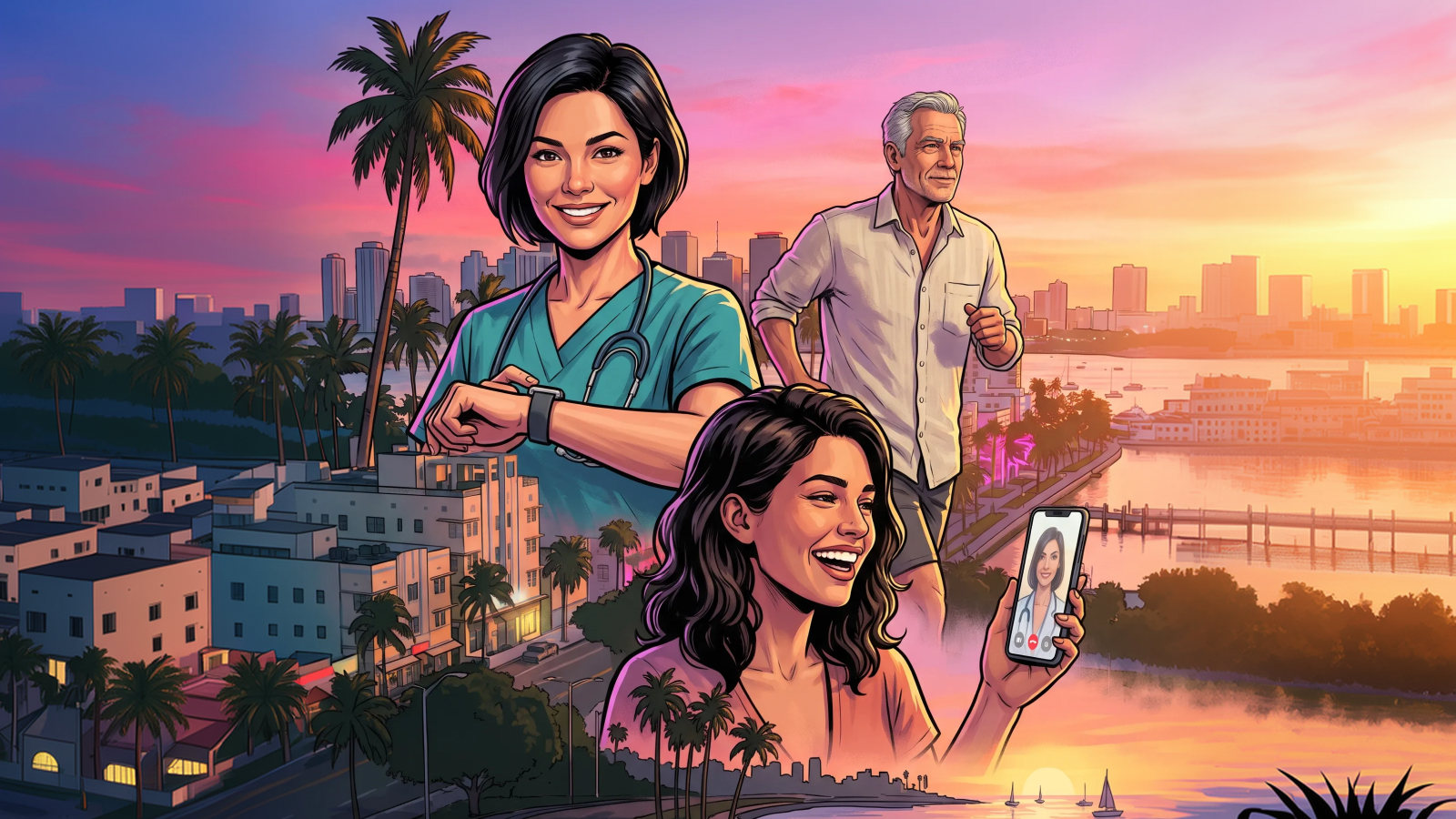
Hyundai, BMW, and Burger King all dressed their social posts in Vice City's pink-and-orange sunsets, hoping some of that attention would rub off. It's a familiar move, and health brands make it constantly. This article breaks down what made GTA 6 marketing work, why copying the look misses the point, and how telehealth and wellness brands can build marketing that competitors can't copy.
What Happened at the GTA 6 Launch?
Grand Theft Auto VI launched on November 19, 2026, after 13 years and two delays. The buildup alone was enormous. The second trailer was watched 475 million times in a single day, and a 27-minute preview on Netflix in August drew 31.1 million views in four days.
Then came launch day. Rockstar estimates the game hit $3.79 billion in worldwide retail sales through its first day, pre-sales included, which makes it the biggest entertainment launch on record. That figure beat the pre-launch forecasts too. Newzoo had estimated $3.3 billion to $5.2 billion for the entire first week.
Every brand wanted a piece of that attention. Almost none could get it.
Why Didn't GTA 6 Have Product Placement?
Because Rockstar didn't want it. Take-Two CEO Strauss Zelnick ruled out product placement and brand deals, explaining that "all the brands are made up."
There are no real sodas in Vice City. No real sneakers, no real cars. Every brand in the game is a parody written and designed in-house, from Patriot Beer to Sessanta Nove, and that's been true of the series for decades. Rockstar could have sold the most-watched billboard on the planet. It chose to protect the world it built instead, and with Take-Two forecasting more than $8 billion in net bookings for its fiscal year, it could afford to.
Why Brands Copied GTA 6's Look Anyway
When brands can't buy their way into a cultural moment, they borrow its style. Hyundai, BMW, and Burger King were among the brands dressing their social posts in GTA's sunset palette in the run-up to launch.
They got the colors. They didn't get the fans.
A burger ad in GTA colors is still a burger ad. The palette might stop a scroll for half a second, but people care about GTA 6 because of the world inside the game, and none of that transfers to a fast-food post. Borrowed style creates recognition without any of the reasons for it.
Why GTA 6's Marketing Strategy Worked
Rockstar spent years building the product, and the marketing came out of it. The studio filled Vice City with parody brands, radio stations, and fictional fashion labels, and it says more than 50 real street artists painted the walls inside the game, without generative AI. By the time trailers ran, the campaign already existed. The ads just showed people what was there.
Even the real-world activations pointed back to the game. Street kiosks in Miami carried ads for Vice City's fake brands. Dazed put Jason and Lucia on its cover dressed in the game's fictional labels. Murals went up in Brooklyn and in Miami's Wynwood district.
Rockstar also said very little. There was a year of silence between trailers and almost no interviews.
The product was the marketing. That's the part competitors can't copy, no matter how many sunset filters they use.
Why Health Brands Make the Burger King Mistake
Most health brands do exactly what Burger King did. One telehealth or wellness brand takes off, and within a few months five competitors look just like it: the same pastel website, the same "doctor-backed" claims, the same before-and-after ads.
Patients can't tell them apart. So they choose on price.
That's the real cost of copying the surface. When every brand in a category makes the same promises with the same visuals, price becomes the only clear difference, which squeezes margins and drives acquisition costs up for everyone bidding on the same patients. Meanwhile, the things patients actually use to decide go unmarketed. In rater8's 2026 survey of patients, a review-management company's research, 55% said they had avoided or canceled a provider because of online reviews, up from 40% the year before. Patients are judging the experience. Most ads are still selling the aesthetic.
How Health Brands Can Build Marketing Competitors Can't Copy
A competitor can copy your website in a week. It can't copy how fast your patients get seen, how easily they reach a provider, or what they say about you afterward. Build your marketing from those things.
Step 1: Mine Your Reviews and Support Messages
Start with what patients already tell you. Read your reviews, support tickets, and post-visit surveys, and note what patients praise that competitors don't offer. Maybe it's a provider who explains lab results clearly. Maybe it's refills that never arrive late. Those details are your positioning, written in your patients' own words, and they make stronger ad copy than anything a creative team invents.
Step 2: Measure Your Speed to Care and Put the Number in Your Ads
Track the time from intake to consult. If it beats competitors, say so with a real number.
"Seen by a provider within 24 hours" is specific, checkable, and hard to fake. "Fast, convenient care" is what everyone says. Just make sure the number holds up across your patient base, not only on your best day, because an advertised promise you miss becomes a bad review.
Step 3: Show Your Providers Answering Real Questions
Record your clinicians answering the questions patients actually ask about side effects, eligibility, cost, and what happens after the first order. It shows expertise and access at the same time. A competitor can hire a designer to match your brand, but it can't fake your clinicians.
Step 4: Share Progress Patients Can See
Where it's clinically appropriate, re-test patients and share results, with consent and accurate claims. Lab changes, symptom scores, and adherence are proof that your care involves more than a first shipment. Keep it honest: present one patient's results as individual outcomes rather than typical results, and follow advertising rules for testimonials in your category.
GTA 6 Marketing FAQ
Does GTA 6 have product placement?
No. Take-Two CEO Strauss Zelnick ruled out product placement and brand deals, and every brand in the game is a Rockstar-designed parody.
How much did GTA 6 make on launch day?
Rockstar estimates $3.79 billion in worldwide retail sales through November 19, 2026, including pre-sales, making it the biggest entertainment launch on record.
What can health brands learn from GTA 6 marketing?
Build marketing from the product experience rather than copying a competitor's look. For telehealth and wellness brands, that means speed to care, provider access, visible progress, and real patient feedback.
Final Take
Rockstar turned down the easiest money in advertising and still had the biggest launch in entertainment history, because the product gave people a reason to care. The brands that copied its colors got a moment of recognition. Nothing more.
Health brands face the same choice every time a competitor takes off.
Copying a competitor's look gets you noticed. Giving patients something worth talking about gets you booked.
